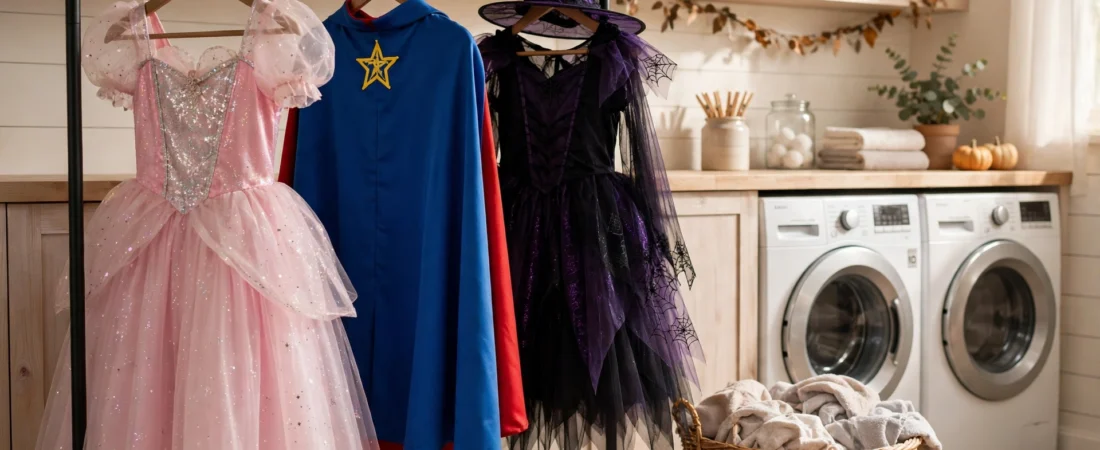
The party is over, the candy is sorted, and now there is a pile in the corner of the laundry room: a sequined dress, a superhero suit with foam muscles, a vampire cape with something suspicious on the collar, and a pillowcase that did double duty as a trick-or-treat bag and now wears a full face of greasepaint.
Halloween costumes are some of the most unforgiving laundry there is. They are built to look good for one night, not to survive a hot wash cycle. Sequins melt and fall, foam cracks, glitter sheds everywhere, and makeup stains set fast if you treat them wrong. The good news: most costumes can be cleaned and saved — for next year, for a younger sibling, or for resale — if you slow down and match the method to the costume.
Here is the order that works: read the label first, treat stains before any water touches the whole garment, wash as gently as the fabric allows, and dry with air, never heat. Let us walk through it.
Start With the Label — and a Quick Inspection
Most store-bought costumes have a care label hiding in a side seam, and it is worth the thirty seconds to find it. Many say “hand wash only” or “spot clean,” and for once, the label is not being dramatic. Costume fabrics are usually thin polyester, nylon, or blends chosen for shine and stretch, not durability. Seams are often serged quickly, trim is glued as often as it is sewn, and decorations may not survive agitation.
Before anything gets wet, do a quick inspection under good light:
- Find every stain: makeup at collars and cuffs, fake blood, food and drink spills, grass and dirt at hems.
- Check what is attached: sequins, glitter, beads, foam padding, plastic or vinyl panels, battery packs for lights or sound (remove those, always).
- Look for weak spots: loose trim, half-glued appliqués, thin straps. Anything already hanging by a thread will not survive washing without a few stitches first.
- Empty the pockets. You would be amazed what ends up in a wizard robe.
If the costume has glued-on decorations, test one hidden spot with a damp cotton swab. If color or sparkle comes off on the swab, that piece is a spot-clean-only job, and knowing that now saves the whole costume.
How to Wash Delicate Costumes Without Ruining Them
Hand-washing is the default
For synthetics, sequins, glitter, tulle, and anything with trim, hand-washing in cool water is the safe route. Fill a sink or tub with cool water and a small amount of gentle detergent — a teaspoon or two is plenty. Turn the costume inside out (this protects sequins and prints), submerge it, and gently squeeze the water through the fabric. Let it soak ten to fifteen minutes, then work any dirty areas softly with your fingers. No scrubbing, no wringing.
Rinse in cool water until it runs clear, press the water out against the side of the tub, then roll the costume in a clean dry towel to absorb more moisture.
If you must use the machine
Some sturdy costumes — plain polyester jumpsuits, simple capes, kids’ character pajama-style costumes — can handle a machine if the label allows it. Turn them inside out, zip or fasten everything, and put each costume in its own mesh laundry bag. Choose the gentle or delicate cycle, cold water, and a mild detergent. Wash costumes separately from regular laundry; a single towel in the load can sand sequins right off.
Drying: air only, every time
This is the rule that saves more costumes than any other: never put a costume in the dryer. Heat warps foam, cracks vinyl and faux leather, melts glitter glue, shrinks cheap synthetics unevenly, and sets any stain you missed. Hang the costume on a padded hanger or lay it flat on a dry towel away from direct sun, and give it a full day. Foam pieces take the longest — make sure they are completely dry before storage, or you will meet mildew in October next year.
Makeup, Fake Blood, and Face Paint Stains
Stains are where costumes live or die, and the order matters: treat the stain first, then wash. Heat and time are the enemy — a stain that sits for a week, or goes through a warm wash untreated, may become permanent.
Makeup and greasepaint
Halloween makeup is mostly oil and pigment, so treat it like a grease stain. Blot — never rub — with a clean cloth to lift what you can. Then work a drop of dish soap or a makeup-removing cleanser into the stain with your fingertip and let it sit fifteen to thirty minutes. Dish soap is made to cut grease, and it is gentle enough for most synthetics. Rinse with cool water and repeat if the color is still lifting. For washable fabrics, an oxygen-based stain remover soak (the powdered kind you dissolve in water) for one to two hours handles what soap leaves behind.
Fake blood
Most fake blood is corn syrup and red dye, and cold water is its weakness. Rinse from the back of the fabric under cold running water as soon as you can. If a pink shadow remains on a washable fabric, soak it in cool water with oxygen stain remover before washing. Skip hot water entirely — heat cooks the dye into the fibers.
What not to use
Keep chlorine bleach away from satin, tulle, and colored synthetics — it can yellow whites, strip color in patches, and weaken delicate netting until it tears. Avoid acetone or nail-polish remover on synthetic fabrics; it can dissolve acetate and damage finishes. And never use hot water or a hot iron on a stain you have not fully removed: heat sets pigment.
Face paint on pillowcases and kids’ clothes
The pillowcase that carried the candy haul and the shirt under the costume usually wash easier than the costume itself. Treat face paint the same way: blot, dish soap worked in by hand, then wash in the warmest water the fabric label allows. Cotton pillowcases are forgiving — an oxygen soak before washing clears most of what is left. Check the fabric before it goes in the dryer, because the dryer will set whatever the wash missed.
Storing the Costume Clean for Next Year
A costume put away dirty is a costume thrown away — stains darken in storage, and food residue invites pests. Once the costume is fully clean and completely dry:
- Fold it loosely with acid-free tissue at the folds if it is a keeper, or hang structured pieces on a padded hanger inside a garment bag.
- Store accessories, gloves, and hats in a labeled bag inside the same box so next year is not a scavenger hunt.
- Keep the box somewhere cool and dry — not a hot attic, which is hard on foam, elastic, and glue.
- Write the size and character on the box. Future you, standing in a store aisle next October, will be grateful.
When to Hand It to a Pro
Honesty matters here: some costumes should not go near your sink. Hand the job to a local laundry or dry-cleaning pro when the costume is heavily beaded or sequined all over, has structured pieces, boning, or layered tulle you cannot separate, is made of real leather, suede, or delicate silk — or when it is an heirloom or an expensive piece you genuinely want to wear for years. A vintage costume from a grandparent’s closet deserves professional hands, full stop.
The same goes for volume. If your household produced four costumes, a pile of makeup-stained clothes, and bedding from a houseful of Halloween guests, a local pro can take the whole pile, handle the delicate pieces piece by piece, and hand it back clean and ready to store. If you want to see how a pro’s page and booking work, take a look at a sample pro page — that is what booking a wash with a neighborhood laundry pro looks like. Booking a few days after Halloween beats the rush of everyone who waited.
And if you are the person friends already hand their delicate laundry to — the one with the mesh bags and the patience for stains — that skill is the start of a real little business. Laundry pros in your area take bookings on their own pages through LaundryCareer, and the week after Halloween, when every costume in town needs saving, is a fine time to start.
Take an hour this week, work through the pile costume by costume, and next October you will open the box to costumes that look like you just bought them.