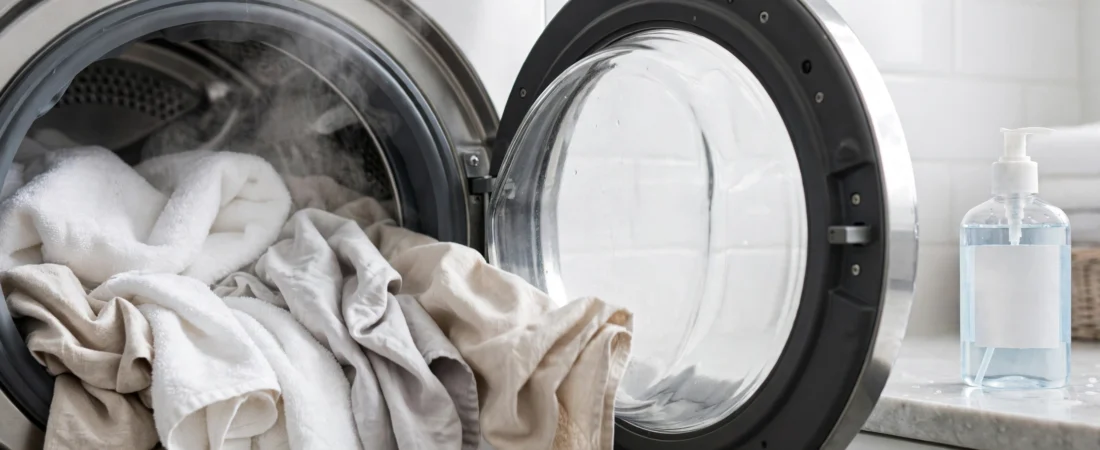
Cold and Flu Season: The Sanitize Service Customers Are Looking For
When someone in a house gets the flu, everything still needs washing — the sick person’s bedding and towels, the clothes of whoever is playing nurse, the kids’ everything. It is the week a household most needs laundry help and least wants to stand over a hamper. That gap is a real service, and it is one you can offer honestly, because the right way to do it is not a secret formula. It is published guidance from the Centers for Disease Control and Prevention (CDC), and your job is simply to follow it carefully and say so.
What the CDC actually recommends for laundry
The CDC’s guidance for laundry when someone is sick is plain and specific. Launder items according to the manufacturer’s instructions — the care label still governs. Use the warmest appropriate water setting for the items, and dry items completely. Do not shake dirty laundry, which can spread germs through the air. Wear disposable gloves when handling dirty laundry from a person who is sick, and wash your hands with soap and water right after removing them. And a point that surprises people: dirty laundry from an ill person can be washed with other people’s items — it does not need its own separate load to be handled safely. The CDC also advises cleaning and disinfecting clothes hampers as part of the routine.
Notice what is not in that list: no special chemicals, no boiling, no miracle products. The guidance is process — temperature as warm as the fabric allows, complete drying, careful handling. That is good news for you, because process is something a careful pro can sell and repeat exactly, load after load.
The service, step by step
Package it as a defined service so customers know what they are buying. Pickup in a sealed bag the customer leaves outside the door — nobody has to hand you a sick-room hamper face to face. At your end: gloves on for sorting, no shaking out items, wash at the warmest setting each item’s label allows, and dry every load completely — completely is the step people at home skip, pulling things out damp to save time. Clean loads go into a fresh bag, not the one they arrived in. Your machine and hamper get wiped down after sick-house loads, the same way the CDC describes for hampers at home. Write those steps on your page. The list is the marketing: a worried customer reads it and hears competence.
Handling rules that protect you, too
You are running a business from your home, often with your own family in it, so run the service with the same care the guidance aims at households. Gloves for every sick-house intake, hands washed after. Keep sick-house laundry sealed until it goes into the machine, and run those loads the day they arrive rather than letting them sit. If you are sick yourself, the honest move is to pause and tell customers — the same plain dealing this whole service is built on. None of this is complicated; it just has to be written down and followed when you are tired, which is exactly when checklists earn their keep.
What to say — and what never to claim
Market the process, never a promise. Honest wording: “Washed at the warmest setting your clothes’ labels allow, dried completely, handled with gloves, following CDC laundry guidance for sick households.” That sentence is strong because every word of it is true and checkable. What you must never write: “kills 99.9% of germs,” “disinfects your laundry,” “hospital-grade,” or anything that guarantees a health outcome. Those claims are for regulated disinfectant products with lab testing behind them — not for a laundry service — and making them is both dishonest and the fastest way to lose the trust this service runs on. Customers do not need a guarantee. They need to know you follow the published guidance carefully, and that is a claim you can make with a straight face.
Price it as care, not as fear
A modest add-on fee for the sanitize process — the gloves, the sealed-bag handling, the priority turnaround — is fair, and sick households pay it gladly. Price it as a flat per-order add-on, posted on your page like everything else. Do not surge-price illness. The household you help kindly through a flu week becomes a regular for years, and tells the story at exactly the tables where your next customers sit. Cold and flu season comes back every year; a reputation for careful, honest help compounds longer than any seasonal premium.