
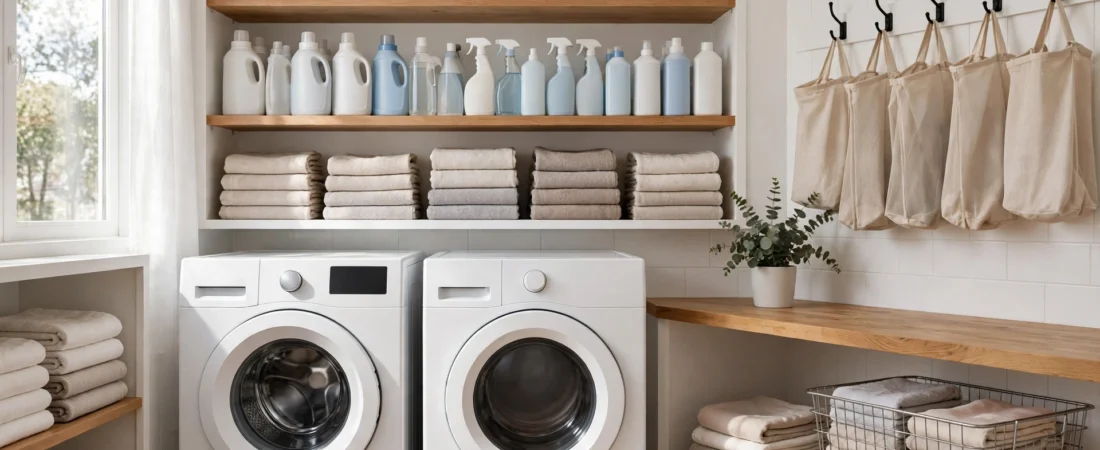
One of the best things about a home laundry business is how little you need to start. If you have a washer, a dryer, and a car, you’re most of the way there. But as orders grow, the right equipment turns a chaotic side hustle into a smooth operation.
This guide covers everything — what you need on day one, what to add as you grow, and what’s nice to have. The guiding principle: a basic setup can start with what you already own. Buy the rest with your first profits, not your savings.
Tier 1: Start Today (You Probably Own This)
Washer and Dryer
Your residential washer and dryer are completely fine to start. Many home pros run their entire business on the same machines they use for their own family’s laundry — at least in the beginning.
What matters more than commercial equipment is capacity and reliability. A large-capacity washer lets you run bigger customer loads efficiently. If your machines are old and unreliable, that’s a business risk worth addressing early — but don’t buy new machines before you have customers. Let revenue fund upgrades.
Priority: Essential. Start with what you have.
Laundry Detergent, Softener, and Scent Options
Stock a quality mainstream detergent, plus fragrance-free and hypoallergenic options. Customers have allergies, sensitivities, and strong preferences — offering “regular, free & clear, or scented” as a choice at booking is a small touch that wins trust.
Buy in bulk once you have steady volume. Until then, regular store sizes are fine.
Priority: Essential. Offer at least a fragrance-free option.
Laundry Bags and Hampers
You need a clean, professional way to transport clothes — not grocery bags. Invest in sturdy laundry bags (mesh or canvas) that you can label per customer. Many pros use color-coded bags or numbered tags so customer loads never mix.
A few collapsible hampers for your car keep pickups organized. This is cheap, and it makes you look legitimate from the very first pickup.
Priority: Essential. Budget-friendly and high impact.
A Car (or Reliable Transport)
Pickup and delivery is the service — without transport, you’re just a person with a washer. Any reliable car works to start; you don’t need a van. Keep the trunk or back seat clean and organized with bags and hangers.
Factor your driving into pricing from day one. Gas, mileage, and your time behind the wheel are real costs.
Priority: Essential. Reliability matters more than size.
Tier 2: Get Professional (First Month)
Folding Table or Large Folding Surface
Folding on your bed or couch gets old fast — and it shows in the results. A dedicated folding table (even a large folding table from a warehouse store) gives you a clean, consistent surface and speeds up the work dramatically.
Crisp, uniform folds are your product’s packaging. Customers judge your whole service by how the stack looks when they open the bag.
Priority: High. Cheap upgrade, visible results.
Hangers and Garment Bags
Some customers want shirts and delicates hung, not folded. Keep a stock of sturdy hangers (not the flimsy wire kind) and a few garment bags for delivery. Ask customers their preference at booking — “folded or hung?” is a pro-level question.
Priority: High once you offer hang-on-delivery (most pros do within the first month).
Hanging Scale
If you charge by the pound — and many home pros do — you need an accurate hanging scale. Weighing bags on a bathroom scale is imprecise and looks amateur. A digital hanging scale costs little and lets you weigh each customer’s bag confidently.
Be transparent about weights. Customers who trust your scale don’t argue about your invoice.
Priority: High if you price per pound.
Stain Removers and Specialty Products
Keep a small arsenal: an oxygen-based stain remover, a grease spotter, white vinegar, and a gentle delicates wash. You don’t need to be a dry cleaner, but handling common stains (coffee, grease, kid-mystery-stains) well is what earns five-star reviews.
Learn basic stain treatment — what works on protein vs. oil vs. tannin stains. A little knowledge here sets you apart enormously.
Priority: High. Knowledge + a few products = premium service.
Tier 3: Scale Up (When Orders Grow)
Second Washer/Dryer or Laundromat Access
Growth eventually hits a wall: your machines. When you’re turning down orders because the washer is full, it’s time to add capacity. Options include a second set of machines (used sets are widely available), or using a laundromat for overflow during peak days.
Don’t over-invest too early. Add capacity when demand proves you need it — that’s the nice problem to have.
Priority: Add when you’re consistently at capacity.
Iron and Steamer
A good steam iron or garment steamer lets you offer press and finish services — a natural upsell. Wrinkle-free dress shirts and blouses command premium pricing, and a steamer is faster and more forgiving than an iron for most fabrics.
Start with the steamer; it’s quicker to learn and harder to damage clothes with.
Priority: Medium-high. Unlocks higher-priced services.
Storage and Sorting System
As volume grows, you need a system: labeled shelves or bins per customer, a “received / washing / drying / folding / ready” workflow, and a way to track whose is whose. This can be as simple as labeled bins and a whiteboard, or a shelf system in a dedicated laundry room.
Lost or mixed-up clothes are the fastest way to kill a laundry business. Your storage system is your quality control.
Priority: Medium-high as order volume grows.
Drying Racks
Not everything goes in the dryer. Delicates, athletic wear, and anything a customer marks “hang dry” need rack space. A couple of sturdy folding drying racks handle this without taking over your home.
Priority: Medium. Essential for delicates service.
Tier 4: Nice to Have
- Label printer or tags: For tagging bags and adding care labels. A nice touch, not day-one critical.
- Branded bags or packaging: Custom bags with your business name look fantastic but wait until you have regulars.
- Water softener or filtration: If your area has hard water, this improves wash quality — but it’s a home upgrade, not a business necessity.
- Commercial-grade machines: Faster cycles, bigger loads, built for volume. A real investment for when you’re doing serious weekly volume.
The Startup Checklist
Here’s the whole thing in one place, in order:
Day one:
- Washer and dryer (your own is fine)
- Detergent + fragrance-free option
- Sturdy labeled laundry bags
- Reliable car
- Your booking page set up (LaundryCareer gives you a branded page with online booking and payments for $29.99/month)
First month:
- Folding table
- Hangers and garment bags
- Stain treatment kit + basic knowledge
As you grow:
- Extra machine capacity
- Steamer for press services
- Customer storage/sorting system
- Drying racks
Later:
- Label printer, branded packaging, commercial machines
What About the Business Side?
Equipment is only half the setup. The other half is how customers find you, book you, and pay you. A booking page with your business name, online scheduling, and card payments makes you look established from order one — and it handles the admin so you can focus on the laundry.
LaundryCareer is built for exactly this: home laundry pros get their own branded booking page, take online bookings and payments, and keep 100% of every order for a flat $29.99/month (Stripe’s card processing fee still applies). See the pricing for details.
Ready to turn your washer and dryer into a business? Start your laundry business on LaundryCareer — $29.99/month, keep 100% of every order. Get started today
Frequently Asked Questions
Do I need commercial laundry equipment to start? No. A standard residential washer and dryer are fine to start — many home pros run their whole business on them. Upgrade to commercial or additional machines only when your order volume consistently maxes out your current capacity.
How much does it cost to start a home laundry business? It can be very low since a basic setup can start with what you already own — your washer, dryer, and car. Beyond that, the meaningful early purchases (bags, hangers, a folding table, a scale, stain products) are all modest. Most pros spend more on detergent in the first month than on equipment.
Should I charge by the pound or by the bag? Both work. Per-pound pricing (with a hanging scale and a minimum order) is transparent and scales fairly. Per-bag or flat-rate pricing is simpler for customers to understand. Many pros use per-pound with a $15-ish minimum per order — enough to make small orders worth the trip.
How do I keep customers’ laundry separate? Color-coded or numbered bags, one customer’s load per machine cycle, and a labeled staging area (received → washing → drying → folding → ready). Never mix customers’ clothes in one load. A simple system followed consistently beats an elaborate one followed sometimes.
What detergent should I use for customers’ clothes? A quality mainstream detergent plus fragrance-free/hypoallergenic options covers nearly everyone. Let customers choose at booking. Avoid heavily scented products as the default — sensitivities are common, and “free & clear” as the standard option is the safe professional choice.
Do I need insurance for a home laundry business? It’s worth considering as you grow. A basic business liability policy or an addition to your homeowner’s/renter’s policy can protect you if clothes are damaged or lost. Requirements and costs vary by location — talk to a local insurance agent once you have regular customers.
The Bottom Line
The equipment list for a home laundry business is refreshingly short: start with what you own, add the professional touches (bags, scale, folding setup, stain kit) with your first revenue, and scale capacity only when demand forces it. The pros who succeed aren’t the ones with the fanciest machines — they’re the ones with reliable systems and happy customers.
Pair that setup with a professional booking presence, and you’re a real business. LaundryCareer gives you your own branded booking page with online payments for $29.99/month flat — so from your very first customer, you look like you’ve been doing this for years.