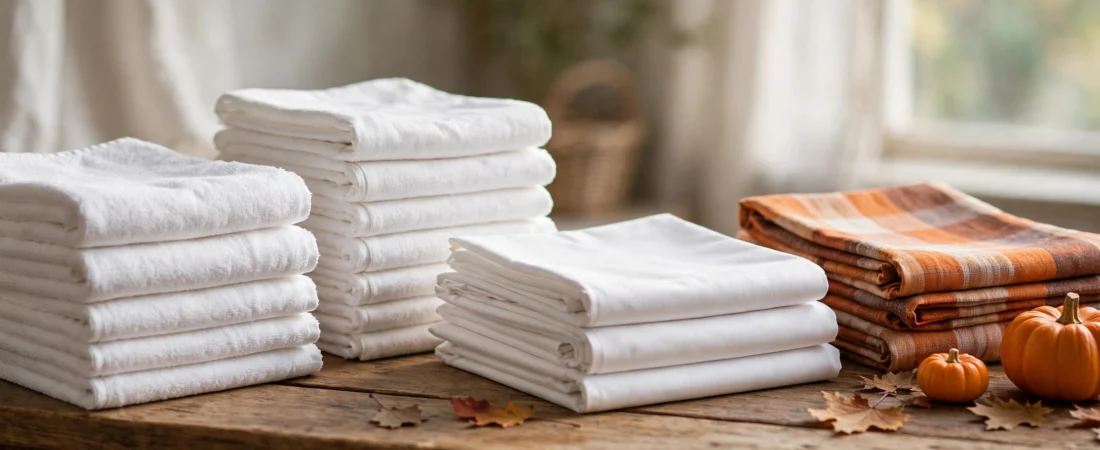
Every November, the same quiet panic spreads through every house that’s hosting Thanksgiving. The guest bed hasn’t been slept in since last year. The spare towels are the thin, sad ones that got demoted from the main bathroom. The tablecloth is folded away with a gravy stain from last Thanksgiving still in it. And the spare comforter smells like the closet it has been sitting in since spring.
Now picture the host doing the math. They are cooking for a crowd, cleaning a whole house, and grocery shopping twice. The linens alone are five, six, seven loads of laundry in the busiest week of their year. That host is not looking for the cheapest option. They are looking for the whole pile to just be handled.
That is your window. A named, packaged guest-linen service is one of the easiest seasonal offers a laundry pro can sell — if you price it clearly, prep for it early, and set a booking deadline you can actually keep. Here’s how.
Why Linens Are the Perfect Seasonal Service
Guest linens have three things going for them that everyday laundry doesn’t. First, they are bulky and annoying: comforters barely fit in home machines, and sheet sets and towel bundles eat an entire evening of wash cycles. Second, they are on a deadline — guests arrive on a specific day, and hosts feel that date coming. Third, the work is simple, repeatable wash and fold. No special skills, no delicate handling for most of it, just volume on a schedule.
There’s one more quiet advantage: almost every host who hands you linens in November has regular laundry too. Do the Thanksgiving job well and you have not made one sale — you have probably earned a weekly customer for the rest of the year.
Name It and Package It: The Guest-Ready Linen Package
“I can wash your sheets” is forgettable. A named package with a clear list of what’s included is something a host can say yes to in one message. Call it the Guest-Ready Linen Package, the Holiday Host Package — pick a name and use it everywhere.
A solid package includes:
- Sheet sets for every guest bed, washed, folded, and bundled by bed
- Bath towels, hand towels, and washcloths — two full sets per guest
- The tablecloth, napkins, and table runner, treated for stains and pressed or neatly folded
- The spare comforter or duvet, washed and fully dried
- A set of kitchen towels for the cooking days
- Pickup and return included, everything bagged by room so the host just carries each bag to the right bed
Keep the choices simple: a per-bed or per-room option for small households, and a whole-house option for hosts expecting a crowd. Two options, clearly priced. Hosts in mid-November do not want a menu — they want a yes.
How to Price the Package
Start with your per-pound rate
Most wash and fold is priced by weight, and typical rates run about $1.50–$2.50 per pound depending on your area. The honest way to build a per-set price is to weigh once: put a typical sheet set, a towel bundle, and a tablecloth set on your scale, multiply by your per-pound rate, and round to a clean number. Now you have a flat per-set price hosts can understand at a glance, built on math you can defend.
Comforters and duvets are the exception — price those per piece, not per pound. Cleaning one commonly runs $25–$45 in typical pricing, depending on size and filling. Say the per-piece price up front, because “the comforter costs extra” is a sentence nobody wants to hear at delivery.
An honest illustration, not a promise
Say one host sends three sheet sets, towels for four guests, the tablecloth and napkins, kitchen towels, and one comforter. That might be roughly 25 pounds of regular wash and fold — about $50 at a $2.00 typical rate — plus $35 for the comforter. Call it $85 for the house. If four houses book in the same week, that’s roughly $340 of seasonal work on top of your regular orders. Your numbers will differ; the point is the pile in a host’s laundry room is worth more than most pros guess. Weigh your own test bundle and run your own math.
One more pricing rule: if you charge extra for last-minute bookings inside the final 72 hours, put that in the offer from day one. A rush fee announced early is professional. The same fee appearing at checkout is a fight.
Prep Before the Rush Hits
Stock the supplies now
Do not discover you’re out of detergent on the Tuesday before Thanksgiving. Stock up on your regular detergent, an oxygen-based stain booster, and — this one matters — a scent-free, dye-free detergent option. Guests include babies, grandparents, and people with allergies and sensitive skin, and hosts will ask. Being able to say “yes, I have a scent-free option” closes bookings. Add extra laundry bags, labels or painter’s tape for bundling by room, and a simple stain kit: oxygen soak for last year’s wine and gravy, an enzyme spray for food stains, and a soft brush.
Plan your real capacity
Linens are bulky. One comforter can hold a large machine for a full wash and a long dry, and a comforter that isn’t fully dry will smell musty by Thursday. Count honestly how many loads you can wash, dry, and fold in a day, and turn that into the number of houses you can take. That number is your inventory. When it’s gone, it’s gone — and a fully booked cutoff makes you look in demand, not unavailable.
Set a cutoff date and mean it
Pick a booking cutoff — the Friday before Thanksgiving works well — for return by Wednesday, the day before guests arrive. Bookings after the cutoff can be waitlist or rush-fee, your call, but the cutoff itself is what makes the whole week run calmly instead of collapsing on Wednesday night.
Market It Like a Deadline, Because It Is One
Start two weeks out. Message every past customer personally — not a mass blast, a short note: “I’m taking six houses for Thanksgiving linens this year. Sheets, towels, tablecloth, the spare comforter — picked up, washed, back before your guests land. Booking closes Friday.” People who already trust you with their laundry are your warmest market by far.
Then post publicly once or twice: a photo of a folded stack of white linens, the package name, what’s included, the price, and the cutoff date. The deadline does the selling — a host who has been meaning to deal with the guest room sees “booking closes Friday” and finally acts.
Make sure booking you takes thirty seconds. This is where having your own booking page earns its keep: the host picks a pickup time, notes “scent-free please” or “gravy stain on the tablecloth,” and pays — no phone tag while you’re mid-fold. If you haven’t seen one, look at a sample pro page to see how simple the flow is for the customer.
Delivery: Back Before the Guests Land
Return everything on Wednesday, or Tuesday if you can. Bag by room — guest room sheets and towels together, the table linens in their own bag, pressed or folded flat. A host making beds at 9 p.m. the night before Thanksgiving should be able to open one bag and finish one room. That little bit of organization is what they will describe to their sister, their neighbor, and their book club.
If you can hold one small slot open for a Wednesday emergency — the forgotten hand towels, the air mattress sheets — do it. Saving one host’s holiday at the last minute is the best advertising you will ever get.
The Bigger Picture
A seasonal package like this is how a side income quietly becomes a real business: a named offer, a clear price, a deadline you keep, and a page where customers book and pay you directly. The hosts are already out there doing the November math. Your job is to be the easy answer.
That’s what LaundryCareer gives you — your own branded booking page with online payments, so customers book you under your name, not a marketplace’s. Your page runs on LaundryCareer — free to join, nothing charged when you sign up — you pick Plus ($8/month plus 4% when you get paid) or Unlimited ($20/month with 0%) when you activate (Stripe’s standard card fee still applies). The Thanksgiving rush is coming either way. Set your package price this week, send the message to your past customers, and let the bookings land on your page.